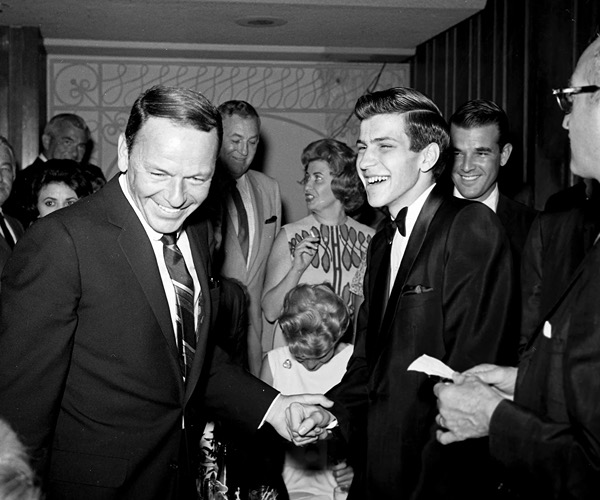
When the son of one of the world’s biggest music stars was kidnapped, investigators faced a race against time to find the kidnappers before they disappeared with the ransom.
Overview
On December 8, 1963, 19-year-old Frank Sinatra Jr. was abducted from his dressing room before a concert in Lake Tahoe, Nevada. His kidnappers demanded a large ransom, and the FBI quickly launched a nationwide investigation that became one of the most famous kidnapping cases in American history. As detectives followed one clue after another, they uncovered fingerprints, tracked ransom money, interviewed witnesses, and identified several suspects. But which piece of evidence turned out to be the strongest, and how did investigators prove who was responsible?
The Background
Frank Sinatra Jr. was beginning his own career as a singer when his life changed in an instant. On the evening of December 8, he was preparing to perform at Harrah’s Club in Lake Tahoe when two men knocked on his dressing room door. One of them claimed he was delivering a package.
When Sinatra opened the door, the two men forced their way inside. They tied up Sinatra’s friend with tape, blindfolded Sinatra Jr., and rushed him to a waiting car before driving away.
Although the kidnappers escaped, Sinatra’s friend quickly freed himself and called police. Officers set up roadblocks across the area, but the suspects managed to get through without being arrested. They drove to a rented house in Southern California, where Sinatra Jr. was held while his famous father waited for instructions.
Because Frank Sinatra was one of the biggest entertainers in the world, the kidnapping immediately became front-page news. The FBI joined local police and began working around the clock to solve the case.
What We Know
Soon after the kidnapping, the suspects contacted Frank Sinatra and demanded $240,000 for his son’s safe return. Before the money was delivered, FBI agents secretly photographed every bill and recorded each serial number in case the cash appeared later during the investigation.
Following the kidnappers’ instructions, the ransom was delivered at a designated location in California. Not long afterward, Frank Sinatra Jr. was released unharmed and was able to contact authorities.
Although he had spent much of his captivity blindfolded, Sinatra Jr. remembered several important details. He described the voices of his kidnappers, recalled parts of their conversations, and shared information about the place where he had been held. Investigators hoped these details would help identify the people responsible.
As the investigation continued, detectives began collecting evidence from several different locations. They searched the suspected hideout, examined items connected to the crime, and looked for anything that could link suspects to the kidnapping.
The Investigation
The FBI and local investigators followed dozens of leads in the days after the kidnapping.
One important clue came from fingerprints discovered on items believed to be connected to the crime. Detectives also searched the rented house where they believed Sinatra Jr. had been held, looking for physical evidence that could place the kidnappers there.
The ransom money became another major focus of the investigation. Because agents had recorded the serial numbers before the money was delivered, they hoped the cash might eventually lead them to whoever had collected it.
Investigators also interviewed many witnesses, including Frank Sinatra Jr., his friend who had been tied up during the kidnapping, and people who may have seen the suspects before or after the crime. As tips poured in from across the country, detectives began identifying several possible suspects.
Three names soon drew the most attention: Barry Keenan, Joe Amsler, and John Irwin. As investigators looked more closely at the three men, they uncovered additional clues that either connected them to—or raised new questions about—the kidnapping.
During the investigation, detectives also learned about statements made by one of the suspects and discovered the existence of a written document that might reveal important information about the planning of the crime. Whether these discoveries would hold up in court, however, remained to be seen.
The Mystery
By the time the investigation was complete, authorities had gathered many different types of evidence. There were fingerprints, witness testimony, physical evidence from the suspected hideout, records connected to the ransom money, statements made by one of the suspects, and a written document that investigators believed was especially important.
However, not every piece of evidence was equally convincing. Some clues directly linked suspects to the crime, while others simply supported what investigators already believed had happened. Defense attorneys even argued that the kidnapping had not happened the way prosecutors claimed, forcing investigators to prove their case step by step.
In the end, the jury had to decide whether all of the evidence fit together well enough to prove guilt beyond a reasonable doubt. Which clue carried the most weight? Was it the fingerprints, the ransom money, the witness testimony, or something else entirely? The answer would determine the outcome of one of the most famous kidnapping trials in American history.
